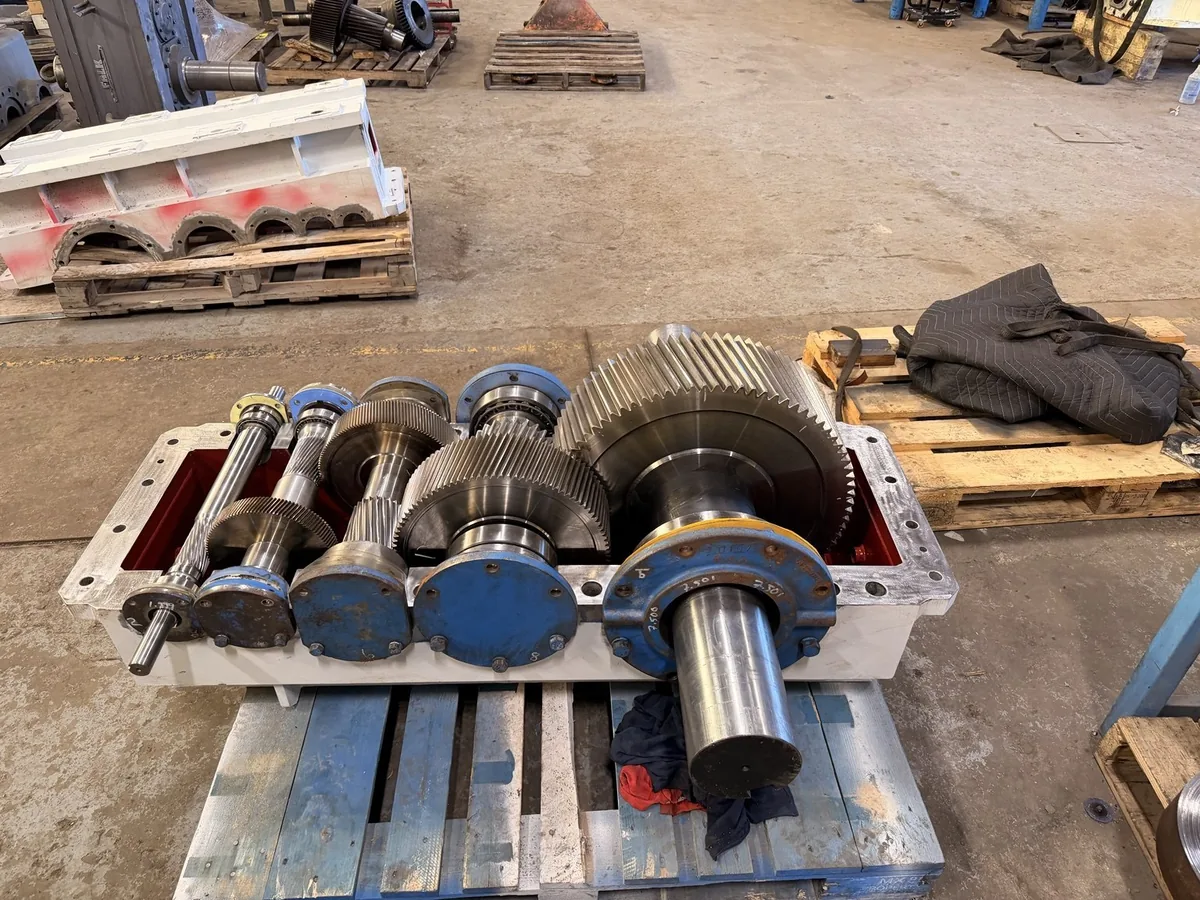
Industrial gearbox rebuild planning turns an overhaul into a coordinated project. The main challenge is agreeing what the rebuild includes, when decisions must be made, and how the unit will return to production. Use this page to prepare an outage plan and compare quotations on the same basis.
Define the outcome before the purchase order
Describe the intended application after the rebuild. If production conditions will remain the same, record that assumption. If the machine will run differently, identify the proposed change for engineering review rather than assuming an overhaul increases the gearbox's rating.
Write down the scope boundaries. Does the shipment include a motor, brake, coupling, cooling equipment, or only the gearbox? Identify which accessories will be assessed and which remain the responsibility of another team. This prevents an incomplete handover when several suppliers are involved.
Build an approval schedule
Before the outage
Gather identification, drawings, previous reports, and the expected removal date. Confirm inspection authorization and how the workshop will communicate findings. Assign a person who can approve changes while the equipment is away.
After inspection
Review the condition report and itemized work proposal. Separate mandatory work from optional recommendations. Confirm whether the schedule is based on components already available or on expected deliveries. An estimate made before dismantling may need revision once the condition is known.
Before return
Agree the required documentation and dispatch arrangements. Coordinate receipt with installation access, lifting resources, and the availability of the people responsible for alignment and commissioning. Workshop completion and production restart are separate milestones.
Compare quotations line by line
| Scope item | What to make explicit |
|---|---|
| Inspection | Components examined and records supplied |
| Replacement parts | Items included and treatment of additional findings |
| Restoration | Proposed work and acceptance criteria |
| Checks | Inspection or testing included in the price |
| Commercial terms | Freight, storage, authorization, and written warranty provisions |
A lower quotation may cover fewer activities. Ask suppliers to identify exclusions rather than trying to infer them from the word “rebuild.” A comparable scope makes the purchasing decision easier to explain internally.
Plan for findings that change the job
Decide how additional damage will be reported and priced. Establish whether work pauses until written approval and who receives the revised schedule. If a critical part is unavailable, request options with their respective assumptions before committing to a different approach.
Keep the repair decision separate from the production contingency. A spare drive, revised outage window, or temporary production arrangement may affect the business decision, but its feasibility must be evaluated for your operation.
Close the project with a handover file
Retain the approved scope, component records, inspection results, operating instructions supplied for the unit, and warranty terms. Record the startup date and initial operating observations. These records provide a baseline for later maintenance and make a future repair inquiry more precise.
Create a rebuild brief before requesting detailed prices
A rebuild brief is the shared description of the project that maintenance, purchasing, and the workshop will use. Identify the gearbox and explain why the overhaul is being considered. A planned inspection after extended service is different from restoring a unit after an unexpected breakdown. The reason for the work helps establish the appropriate evaluation and the information needed before a firm scope is agreed.
Record the equipment's current state. Is it installed, disconnected, removed, or already dismantled? List the documents available and identify any missing nameplate or drawing information. If a previous contractor has worked on the assembly, include that history. This helps the receiving workshop understand whether it will inspect an intact gearbox or inherit a partially completed project.
Describe the desired deliverables
Specify the records you need at the end: an inspection report, approved parts list, agreed check results, and any installation or storage instructions applicable to the work. Ask the workshop to confirm what it can provide. A clear request allows documentation to be planned during the job instead of being reconstructed after the gearbox has been dispatched.
Keep operational requirements separate from commercial preferences. The technical scope describes the work and acceptance requirements. The commercial section addresses authorization, payment arrangements, freight, and other terms. Both matter, but mixing them in an informal message can leave important requirements difficult to find.
Map the outage as a sequence of dependent steps
A useful outage schedule shows more than the days the gearbox is expected to spend at the workshop. Include site preparation, removal, packing, collection, receipt, inspection, authorization, repair, return transport, installation, and commissioning. Identify which activities cannot begin until another activity is complete. A delay in approving the inspection findings can affect the restart date even if the repair work proceeds exactly as planned.
Assign an owner to each step and record the latest information needed to keep it moving. The shipping coordinator may need packaged dimensions, while purchasing may need a revised quotation. The installation team may need confirmed delivery timing and access arrangements. A single schedule makes these dependencies visible before they become urgent.
Distinguish a target from a confirmed commitment
Mark dates as requested, estimated, or confirmed. A desired production restart is a planning requirement, not evidence that all suppliers can meet it. Ask what assumptions support each estimated date. Update the plan when inspection findings or component delivery information change rather than continuing to circulate an outdated schedule.
Build the review cadence around decisions. Agree when the next meaningful update is expected, who receives it, and what will trigger immediate contact. A photograph of progress can be helpful, but it should accompany information about milestones, outstanding approvals, and any change to the forecast.
Set clear authorization boundaries
Evaluation approval should state what activities are authorized before the final repair decision. Ask what happens after dismantling if the proposed rebuild is declined. Establish the treatment of loose components, reassembly requests, storage, and return arrangements. These questions are easier to resolve before the equipment has been taken apart.
For the rebuild itself, identify which work is included in the accepted quotation and how additional findings will be handled. A blanket instruction to “do whatever is needed” can create confusion about cost and scope. A written approval process gives the workshop a way to raise necessary changes and gives your team a clear decision to make.
Use a change record
A change record can be simple: describe the new finding, the proposed work, the cost effect, the schedule effect, and the person approving it. Keep the original scope and the approved changes together. This produces a final account of the job that is easier to review than a chain of disconnected messages.
If your organization requires a purchase-order amendment, identify that requirement early. A verbal agreement from a technician may not satisfy purchasing rules. Make sure the workshop knows which contact can authorize technical changes and which contact can authorize the associated expenditure.
Agree what completion means
Define the acceptance checks before the rebuild is finished. Ask what inspections or tests are included, the conditions under which they will be performed, and the records supplied. Do not assume that every rebuild includes an application-specific load test or that every workshop has the same testing facilities.
Where a requested check is unavailable, discuss an appropriate alternative with the responsible technical parties. Record the limitation and any checks that must occur during installation or startup. This makes the handover more transparent than describing all completed work with a broad statement such as “fully tested.”
Separate workshop release from site acceptance
The workshop can confirm that the agreed scope and release checks are complete. The site team still has responsibilities for installation and the controlled return to operation. Define who reviews the documentation, who receives the gearbox, and who records the initial operating observations. Avoid leaving the final acceptance decision to whoever happens to unload the truck.
If the unit will become a spare rather than return immediately to service, discuss that before dispatch. Storage preparation and documentation needs may differ from those of a unit being installed promptly. Obtain instructions applicable to the particular equipment and planned storage conditions.
Prepare a practical handover meeting
Before closing the rebuild project, review the final scope against the approved work. Confirm whether any recommendations remain open and which party owns them. Check that the unit identification on the paperwork matches the equipment received. Resolve missing records while the workshop's project team is still engaged with the job.
Use the meeting to capture lessons for the next outage. Were drawings difficult to locate? Did an authorization delay the schedule? Were shipment details incomplete? These are planning improvements, not reasons to rewrite the history of the repair. A short project review can make the next rebuild easier to organize without adding unnecessary reporting.
For a hypothetical scheduled overhaul, the most useful improvement might be assigning a backup approver before the shutdown. That small step can prevent an inspection report from waiting unanswered while the main contact is unavailable. This example illustrates project coordination; it is not a promised turnaround or a customer case study.
Make responsibilities visible before the shutdown
Create a short responsibility list covering removal readiness, evaluation approval, technical questions, quotation changes, transport coordination, and return acceptance. For every item, name the primary contact and the person who can act if that contact is unavailable. Share the current list with the workshop and the internal project team. A familiar supplier relationship does not remove the need to know who owns this particular job.
At each milestone, record what has been completed and what the next party needs. For example, an approved scope may still require a purchasing document before work can proceed. A completed repair may still await dispatch instructions. This simple handoff record helps expose administrative dependencies that can otherwise be mistaken for workshop delay. Keep it with the schedule so project updates describe the same sequence and do not send different teams in different directions.
Gearbox rebuild planning: frequently asked questions
Is a rebuild the same as replacing every internal component?
Not necessarily. The word describes a service category, while the written scope defines the actual work. Ask which components will be inspected, retained, restored, or replaced and how those decisions are documented. Do not infer a complete new internal assembly from the word “rebuild” alone.
Can we get a fixed price before the unit is dismantled?
A supplier may offer a preliminary estimate or a price with stated assumptions, but hidden condition can affect the final scope. Ask whether the quotation is firm, conditional, or limited to evaluation. Understanding the pricing basis is more useful than comparing figures that cover different levels of uncertainty.
Who should approve changes during the overhaul?
Name a person with the appropriate authority and a backup contact before work begins. Your organization may require separate technical and purchasing approvals. Tell the workshop how those approvals must be recorded so a necessary change does not stall because it was sent to someone unable to authorize it.
Should the motor and coupling travel with the gearbox?
That depends on the agreed evaluation and repair boundaries. Confirm what the workshop needs to receive and what work is included on attached components. Sending accessories without agreement can complicate handling and pricing; retaining an item that is needed for the assessment can also delay the project.
Does an overhaul increase the gearbox's capacity?
Restoring a gearbox does not by itself establish a higher rating. Any proposed change in operating duty should be assessed by the responsible engineering party. State the intended application clearly and distinguish restoration of the existing unit from an approved redesign or uprating project.
How should we compare two rebuild schedules?
Check the starting point, inspection allowance, approval assumptions, component availability, and transport time in each proposal. Compare the expected date the unit can be installed, not just workshop duration. Ask which milestones are confirmed and which depend on findings that are not yet known.
What happens if additional damage is discovered?
The agreed change process should apply. Request a description of the finding, the proposed response, and the effect on cost and timing. Keep approval with the project records. If the change makes rebuilding unattractive, review the alternatives before authorizing work that commits the project further.
Do all rebuilt gearboxes receive a load test?
No single test package can be assumed from the service name. Request the specific checks included in the proposal and ask what they demonstrate. If a load test is required for your project, establish its availability, conditions, and acceptance requirements before placing the order.
What warranty should we expect?
Review the written terms offered for the particular project. Confirm the covered work, start date, exclusions, and process for reporting a concern. This website does not establish a warranty period or coverage. Those details must be confirmed in the business's actual quotation and applicable terms.
What is the best first step for a planned overhaul?
Prepare an equipment brief and an outage window, then identify the records and approvals needed for evaluation. Include the current operating duty and any intended changes. A clear starting brief helps the workshop propose a scope and helps your team organize the surrounding project before the shutdown begins.
Prepare your equipment details
Bring your gearbox identification and project notes together before discussing the next step.
Create a repair brief ↗