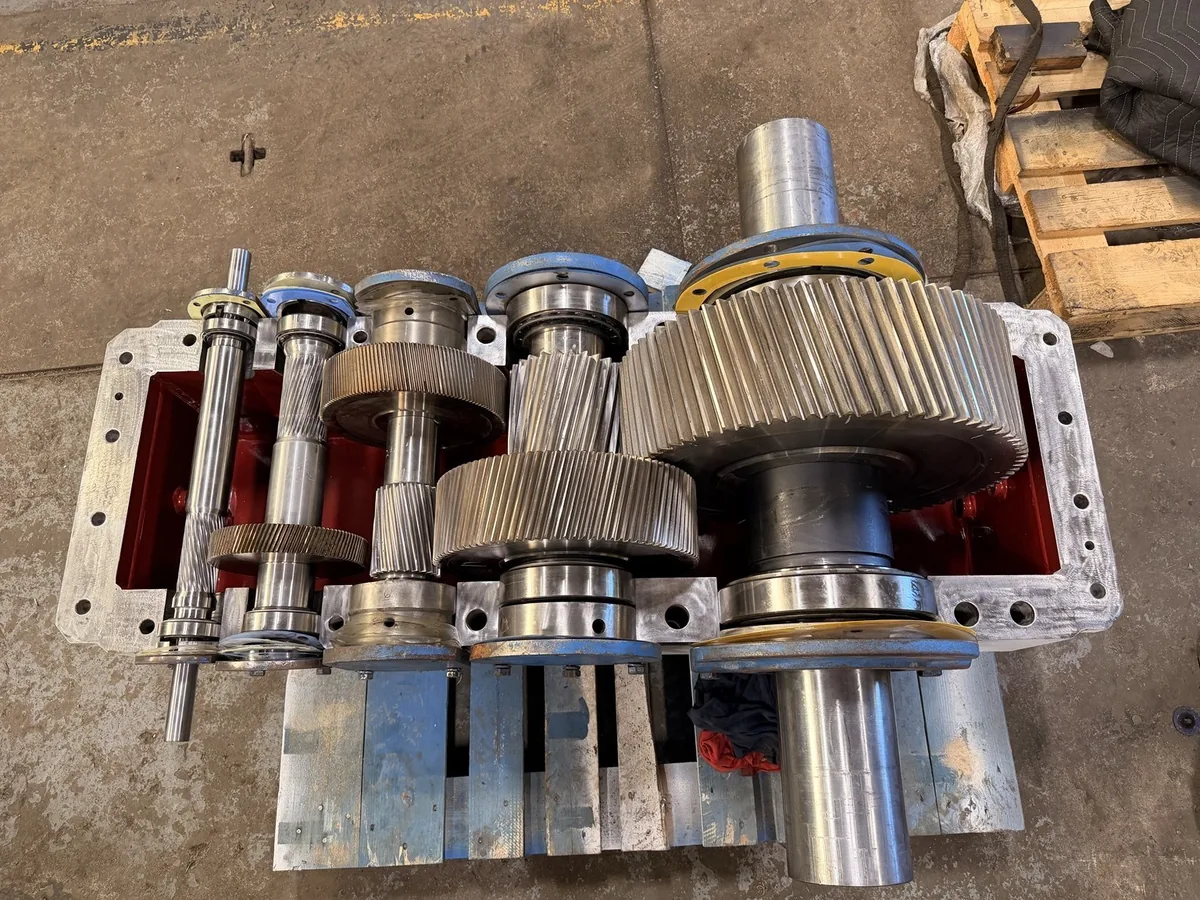
Cooling tower gearbox repair should assess the fan drive as a system. The gearbox, motor, driveshaft or coupling, fan assembly, support structure, and lubrication arrangement influence one another. Replacing internal parts without investigating fan condition, alignment, moisture entry, and mounting can leave the conditions that caused the failure in place.
The correct repair scope depends on the tower and drive model. A right-angle fan reducer has different inspection and installation requirements from other drive arrangements. Identify the equipment before choosing lubricant, interpreting vibration, or specifying assembly settings. This resource explains the evaluation and purchasing decisions; the manufacturer's instructions govern the actual work.
Why cooling tower gearboxes need a system assessment
Cooling tower drives often operate in a wet environment and may be installed where access is difficult. Their condition can be affected by moisture, corrosion, changing fan duty, and the connected structure. The motor may be separated from the reducer by a driveshaft, adding interfaces that need inspection and alignment.
A gearbox symptom can also be the response to a fan or support problem. Blade condition, hub attachment, driveshaft condition, and structural movement belong in the investigation where applicable. The gearbox workshop and tower maintenance team should agree who assesses each part so the repair does not stop at an artificial boundary.
Identify the fan-drive configuration
Record the gearbox model, ratio, mounting orientation, motor information, driveshaft arrangement, and fan identification. Note modifications and whether the tower uses a variable-speed drive. Obtain the relevant operating manuals and drawings. Generic advice for one fan reducer should not be applied to another solely because both sit inside a cooling tower.
Recognize the access and movement hazards
Electrical isolation alone may not control a fan that can move with airflow. Tower access, rotating parts, elevated work, lifting, and environmental exposure require the site's approved procedures. Qualified personnel should secure the equipment and control stored or externally driven motion before approaching the fan, driveshaft, or gearbox.
Common symptoms in cooling tower fan drives
Increasing vibration at the tower or reducer
Vibration can originate from the fan, driveshaft, coupling, gearbox, motor, or supporting structure. Record measurement location, direction, speed, and operating condition. A change at one sensor does not independently identify a failed gear or bearing. Compare trends and inspect the connected system to establish a plausible source.
If vibration varies strongly through a speed range, preserve the operating data and involve the responsible drive and tower specialists. Do not repeatedly run through a problematic range simply to reproduce the symptom. The allowed speed range and any restricted operating bands must follow the equipment's engineering requirements.
Oil leakage at the fan-drive gearbox
A leak may involve seals, shaft surfaces, housing joints, fill condition, or breathing arrangements. Trace its origin and record the oil level using the specified method. Oil on nearby structure can make the source difficult to locate. A new seal will not correct a damaged shaft track or another unresolved cause of leakage.
Milky oil, corrosion, or water contamination
Cloudy oil can suggest water or entrained air, but appearance alone does not quantify contamination. Use an appropriate sample and laboratory interpretation where needed. Investigate possible entry paths, including seals, breathers, inspection openings, and maintenance exposure. The moisture source must be addressed alongside any damaged bearings or gears.
Noise during startup or operation
An unusual sound can reflect bearing distress, gear damage, looseness, or a problem in the connected drive. Note whether it occurs only during acceleration, at a particular speed, or continuously. Avoid assuming that a normal startup sound on another tower establishes what is acceptable for this unit.
Reduced cooling performance
A process cooling problem is not automatically a gearbox problem. Fan speed, airflow, water distribution, fouling, weather conditions, and operating configuration can influence performance. Verify whether the drive is delivering its intended function while the tower team evaluates the broader thermal system.
What to collect before requesting a repair assessment
Provide photographs of the nameplate, installed gearbox, driveshaft or coupling, fan hub, and accessible mounting features. Include the tower location, access restrictions, unit weight if known, and removal status. Record the symptom timeline and relevant vibration, lubricant, temperature, and maintenance records.
State whether the failure followed a fan adjustment, driveshaft replacement, motor change, storm exposure, extended shutdown, or a control change. These events do not establish cause by themselves, but they help direct inspection. Keep operator observations separate from conclusions about which component failed.
Verify lubricant and maintenance information
Identify the oil specification actually used, the last service date, additions, and any mixed products. Use the model's instructions for oil selection, level checks, and intervals. The SPX Marley user manual illustrates why tower maintenance must be coordinated with the applicable Geareducer service instructions; it is not a universal lubricant schedule.
Include the planned operating regime
Continuous duty, seasonal use, frequent starts, variable speed, and long idle periods can affect the questions that need answering. A tower returning from storage needs a readiness assessment, while a continuously operating critical cell may need an outage and spare plan. Tell the repair provider what the unit will do after it returns.
The cooling tower gearbox repair process
Removal planning and as-received inspection
Coordinate isolation, fan restraint where required, lifting, driveshaft handling, and receiving arrangements before removal. Mark orientation and record connections as appropriate to the approved method. At intake, document condition, identification, loose accessories, leakage, corrosion, and shipping damage separately from operating damage.
Teardown and gear inspection
Disassembly should preserve the original position of gears, bearings, shims, spacers, and associated parts. Inspect tooth surfaces and roots for wear, pitting, scuffing, cracking indications, and fracture. Assess mating parts together. The pattern of damage may help distinguish a local defect from a broader alignment or lubrication problem.
Shaft, bearing, and housing measurements
Inspect journals, shoulders, seal surfaces, keys or splines, bearing bores, and mounting features. Relevant dimensions and geometry must meet the applicable acceptance basis. A worn housing seat can affect a new bearing; a damaged mounting interface can influence alignment even after the internal assembly is restored.
Moisture and corrosion evaluation
Identify which surfaces and components have been affected and whether damage compromises function or integrity. Surface discoloration and deep corrosion are different conditions. The scope should explain what will be cleaned, retained, restored, or replaced and how acceptance will be determined after the work.
Sealing and lubrication restoration
Review seals, shaft tracks, breathers, plugs, passages, and auxiliary lubrication components where fitted. Correct configuration depends on the mounting arrangement and model. Do not copy an existing breather or plug position without checking whether the unit was configured correctly before the failure.
Reassembly and documented checks
Use the required bearing settings, gear adjustments, fastener requirements, and assembly methods. Record relevant backlash and contact checks where applicable. A generic tolerance applied to every right-angle reducer is not an adequate acceptance basis. Unavailable specifications require an appropriate technical resolution rather than an assumed value.
Inspect the fan, driveshaft, and structure before reinstalling
A repaired gearbox should return to a system that has been assessed for the initiating problem. Examine the connected driveshaft or coupling using its instructions, including any relevant condition, balance, alignment, and fastening requirements. Long drive connections can be sensitive to installation details that are not visible from the gearbox alone.
The tower team should assess fan blades, hub condition, clearances, mounting, and structural support as required by the equipment. Blade setting and fan balance are design-specific activities, not generic adjustments to reduce gearbox noise. Identify any damage or movement that could reload the repaired unit abnormally.
Keep responsibilities explicit
The workshop may repair the reducer while another contractor handles fan inspection and alignment. State who signs off each task and what records will be provided. Without that division, a gearbox can be returned successfully while a known tower-side problem remains unassigned.
Review variable-speed operation
Where a variable-speed drive is installed, confirm that the permitted operating range and protection settings suit the fan-drive system. Speed affects lubrication and dynamic behavior differently across designs. Do not assume every reducer can operate indefinitely at any speed the motor drive can command.
Testing and return to service
Workshop checks should state their actual conditions and limitations. A running test can help identify leakage, unusual noise, or assembly concerns, but an unloaded reducer is not the complete cooling tower fan system. Define any additional test requirement before work begins and avoid interpreting a bench test as proof of tower vibration performance.
At installation, verify the unit, mounting, lubricant condition, venting configuration, connections, alignment, guards, and approved startup readiness. Follow the tower and reducer instructions. Capture baseline observations at documented operating conditions so future readings can be compared meaningfully.
Verify the original problem was addressed
If water entry initiated the damage, record the corrective work on the entry path. If a fan or driveshaft issue was involved, obtain the relevant inspection and installation records. If the cause remains uncertain, identify the monitoring and follow-up actions rather than reporting a confirmed root cause that the evidence does not support.
Plan idle periods deliberately
Seasonal shutdown and spare storage need equipment-specific preservation. Condensation and corrosion can develop while equipment is idle. Obtain instructions for the actual duration and environment, and record any required maintenance or readiness checks. Do not assume that a rebuilt reducer stored for months can be installed without inspection.
Repair versus replacement for a cooling tower gearbox
Repair is worth evaluating when the housing and critical geometry remain suitable and acceptable parts are available. Retaining the correct interfaces may simplify installation. Compare the repair with a replacement that matches ratio, rotation, mounting, shaft geometry, fan duty, and lubrication requirements; matching appearance or nominal power alone is insufficient.
Replacement becomes more attractive when structural damage, corrosion, unavailable components, or changed operating requirements undermine a credible repair. Include tower access, lifting, driveshaft changes, installation labor, alignment, and commissioning in the cost and schedule comparison. A reducer price alone does not describe the installed project.
For widespread damage, use the gearbox rebuilding framework. If the outage is unplanned, the emergency repair page helps organize the response and alternatives. Neither route should bypass assessment of the connected fan system.
Applications and service scope
Cooling tower fan drives support process cooling and building or plant heat-rejection systems. The operating context can include industrial production, power-related facilities, and large cooling installations. Service requirements vary with tower design, criticality, exposure, access, and maintenance practices rather than industry name alone.
Confirm the actual reducer model and tower arrangement before discussing capability. This page does not claim support for every tower brand, original-manufacturer authorization, fan balancing services, or field access capability. Those details belong in the specific project scope and can involve more than one service provider.
Why consider Industrial Gearbox Service?
Industrial Gearbox Service states that its team brings 50 years of experience in industrial gearbox service and repair. This is a company-provided claim. For cooling tower work, the useful outcome is an explanation that connects internal findings with the fan, driveshaft, mounting, moisture exposure, and lubrication conditions.
Ask how the proposed inspection will distinguish gearbox damage from a tower-side cause, which assembly measurements will be recorded, and what remains for field commissioning. Confirm handling capacity, model suitability, test availability, and commercial terms. This guide makes no fixed turnaround or warranty promise.
Prepare the repair brief with equipment identification, access information, operating regime, and condition records. The current private-preview tool creates a local download; it does not send a request or arrange collection. The shipping guide provides additional coordination questions once receiving arrangements are established.
Coordinate the tower outage around access and interfaces
A cooling tower repair schedule should include more than workshop time. Map the sequence from isolation and access preparation through fan-drive separation, lifting, transport, repair, return lifting, alignment, and commissioning. Identify which activities depend on weather, available lifting equipment, or the operating status of adjacent equipment. The site's responsible personnel should decide the safe working arrangements.
Record which interfaces are disturbed during removal. Marking an original position can support reassembly, but it does not prove the original alignment was correct. Use the applicable installation requirements when the repaired gearbox returns. Keep driveshaft and coupling records with the gearbox report so the commissioning team has the complete connection history.
If another tower cell or spare drive will support the process during the outage, have the responsible operations and engineering teams confirm the operating arrangement. A gearbox repair page cannot establish the cooling capacity or safe operating limits of that temporary configuration. The repair provider should still know the required return date and any changing outage constraints.
At handover, review the tower-side findings beside the workshop findings. Close each item with a responsible person and evidence of completion. This makes it harder for a moisture source, damaged fan component, or mounting problem to disappear from the project simply because the reducer itself has been repaired.
Frequently asked questions
Can fan imbalance damage a cooling tower gearbox?
Abnormal fan forces can affect the drive system. Assess fan condition and the connected structure when vibration or repeated mechanical problems occur. The exact mechanism requires evidence from the particular installation.
Does milky gearbox oil prove water contamination?
It is a useful warning observation, but appearance alone is not definitive. Sampling and appropriate analysis can help distinguish water, air entrainment, and other changes while the entry path is investigated.
Why can a cooling tower fan move after the motor is isolated?
Airflow can drive rotation in some conditions. The site's isolation procedure must address externally driven motion and the specific equipment, not only removal of electrical power.
Is a leaking fan-drive seal always the primary fault?
No. Shaft condition, bearing support, breathing, oil level, or other conditions may contribute. Trace the leak and assess the surrounding components before defining a seal-only repair.
Should the driveshaft be checked with the gearbox?
Yes, where it forms part of the affected drive path. Its condition, installation, and alignment can influence system behavior. Define who performs the checks and which instructions apply.
Can low cooling performance identify a damaged reducer?
Not by itself. Cooling performance also depends on airflow, water distribution, fouling, weather, and operating configuration. Verify drive function alongside the broader tower assessment.
Can any cooling tower reducer run at very low speed?
No universal assumption is appropriate. Confirm the permitted speed range and lubrication requirements for the model and fan system before changing variable-speed operation.
Do all cooling tower gearboxes use the same oil?
No. Lubricant requirements depend on the reducer, operating conditions, and manufacturer instructions. Do not select an oil solely because it was used successfully in another tower.
Why does vibration change at different fan speeds?
Excitation and structural response can change with speed. The source may involve several parts of the fan-drive system. Preserve the data and obtain an equipment-specific assessment rather than choosing an arbitrary operating band.
Can corrosion make a gearbox housing unsuitable for reuse?
Yes, depending on location, depth, structural effect, and recoverability of critical features. The assessment should distinguish superficial corrosion from damage that compromises function or integrity.
Is a bench test enough to confirm low tower vibration?
No. A bench setup does not reproduce the complete fan, driveshaft, structure, and operating environment. Field installation and commissioning checks remain necessary.
What should be checked after a driveshaft replacement?
Follow its installation instructions and verify relevant alignment, fastening, orientation, and guarding requirements. Record baseline system behavior and investigate any new symptom rather than assuming the replacement is unrelated.
Can a different-ratio reducer be installed in the same tower?
Only after engineering review of fan speed, power demand, structural and operating requirements, and protections. A ratio change affects the system and is not a routine like-for-like replacement.
Should a stored cooling tower gearbox be inspected before use?
Yes. Verify identity, compatibility, preservation, lubricant condition, and readiness under the applicable instructions. Long storage can introduce issues even without operating hours.
What information helps plan removal from an elevated tower?
Provide access restrictions, lifting arrangements, dimensions, confirmed weight when available, isolation requirements, and receiving plans. Qualified site personnel must determine the actual removal method.
Can a blocked breather contribute to leakage?
It can contribute to unsuitable internal pressure conditions. Inspect the breathing arrangement along with seals, oil level, and shaft surfaces, using the configuration required for the specific reducer.
Does a rebuilt gearbox fix damaged fan blades?
No. Fan condition is a separate part of the system assessment. Assign corrective work before reinstalling the reducer so an unresolved fan problem does not remain in service.
Why record the gearbox mounting orientation?
Orientation can affect lubricant level, port configuration, and the correct installation arrangement. Confirm the model's requirements rather than assuming a unit is ready for any mounting position.
What should a cooling tower repair handover include?
Include component findings, completed work, assembly and test records, lubrication instructions, shipping condition, and field actions still required. Identify which fan and driveshaft checks were outside the workshop scope.
How do we decide between repair and a spare reducer?
Compare technical compatibility, condition, preparation, installation work, and time to commissioned operation. An available spare is useful only when its suitability and readiness are established.