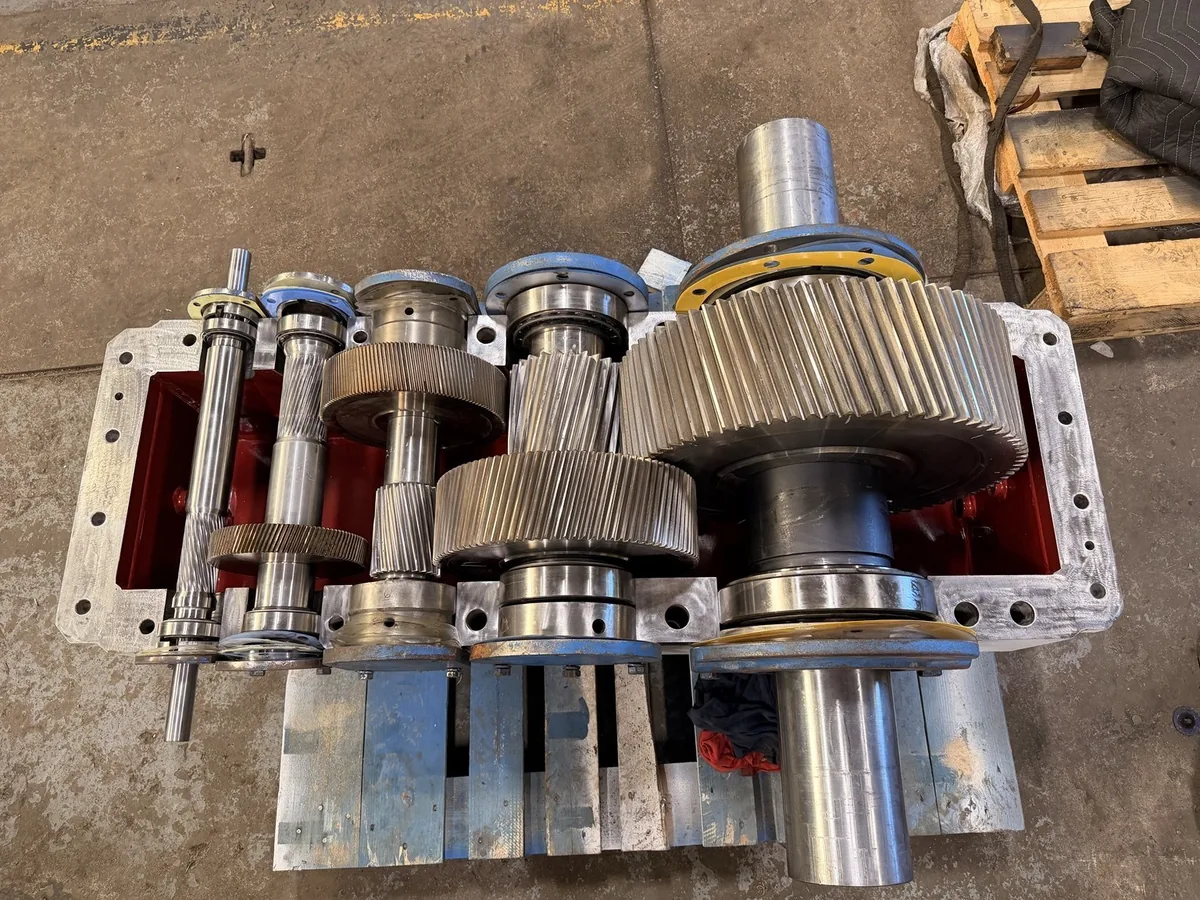
Horsburgh & Scott gearbox inquiries can concern a complete drive, an individual gear, or a proposed engineering change. Keep those requests distinct. A repair intended to restore the existing duty and a redesign intended to change performance require different information and approval.
Identify the gear or enclosed drive
Photograph the nameplate and retain available drawings, serial information, and previous service records. For a loose gear or shaft, supply the original assembly context as well as the component identification. A casting mark or search spelling is not a substitute for a verified part record.
Repair versus engineered change
Horsburgh & Scott describes manufacturing, rebuilding, field service, and engineering capabilities on its site. For your project, ask the proposed provider to distinguish restoration to an established requirement from a change in ratio, duty, material, or configuration. An improvement claim should identify the new requirement and supporting engineering review.
Prepare a large-drive project brief
- State the driven machine, operating duty, and known fault history.
- Identify which gears, shafts, housing features, and connected equipment are included.
- Provide available handling information without estimating an unknown lifting weight as fact.
- Define shutdown timing and any field inspection or installation support required.
Storage is part of the repair plan
If the repaired unit will be held as a spare, ask for the applicable preservation, storage, inspection, and commissioning instructions. Record who will maintain that condition and when the unit is expected to return to service. A completed workshop repair is only one stage of the equipment’s return to operation.
Manufacturer reference
Horsburgh & Scott equipment and service overview. This manufacturer resource supports equipment identification and planning; it does not establish Industrial Gearbox Service as an authorized repair center or parts distributor.
Prepare your equipment details
Record the nameplate, application, symptoms, facility location, and required date in the repair brief. The repair brief tool saves the brief to your device; it does not send a request. Service suitability, parts availability, and delivery arrangements require confirmation.